
Step one of the cycle
Nine traditions, from the Nile to the Pacific Northwest.
We move one tradition at a time. Study the one that's open, and the next one unlocks — with the Cast bank ready to put Nubian, West African, Afro-Latina, and Afro-Caribbean models in the picture.
 01Open now
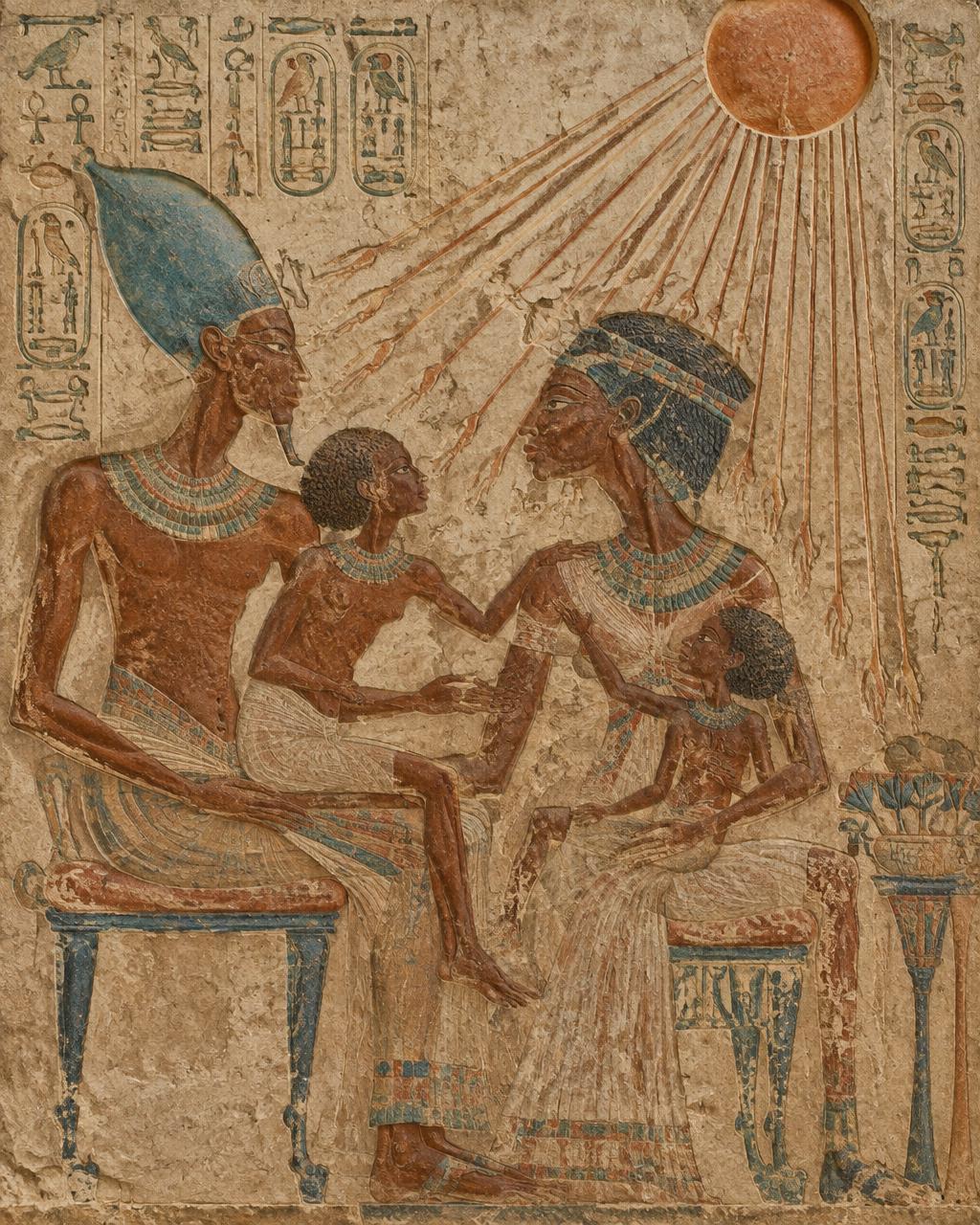
Amarna Period Egyptian Relief
Akhetaten (Amarna), Egypt · c. 1350 BCE
For about seventeen years, one pharaoh turned Egyptian art upside down. He moved the capital to a new city in the desert and put a single god at the centre of everything: the Aten, the sun disk, its rays ending in little hands that reach down to bless the royal family. The artists followed. Bodies grew long and soft, heads tilted, and for the first time the king was shown at home — kissing his daughters, sitting with his queen, relaxed under the sun. It is the most intimate moment in three thousand years of Egyptian art.
Study this movement →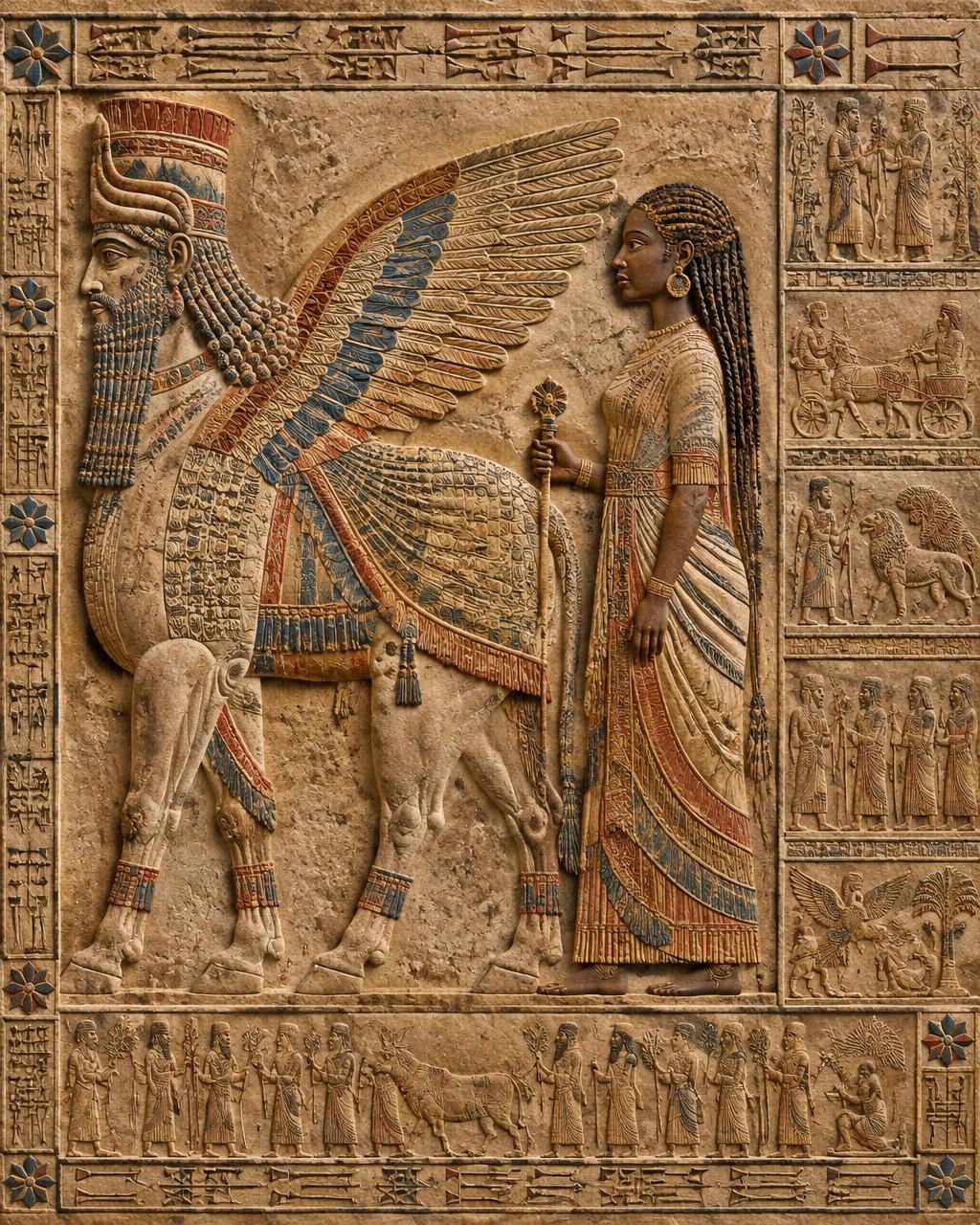 02Open now
Assyrian Palace Relief
Nimrud & Nineveh, Mesopotamia (northern Iraq) · c. 900–600 BCE
Assyrian kings lined their palaces with carved stone panels taller than a person, telling the story of the empire in long bands that run around the room like a scroll. At every doorway stood a lamassu — a guardian with a bull's or lion's body, eagle wings, and a crowned human head, carved so that from the front it stands still and from the side it walks. Wedge-shaped cuneiform writing runs straight across the carving. It is storytelling at architectural scale.
Study this movement →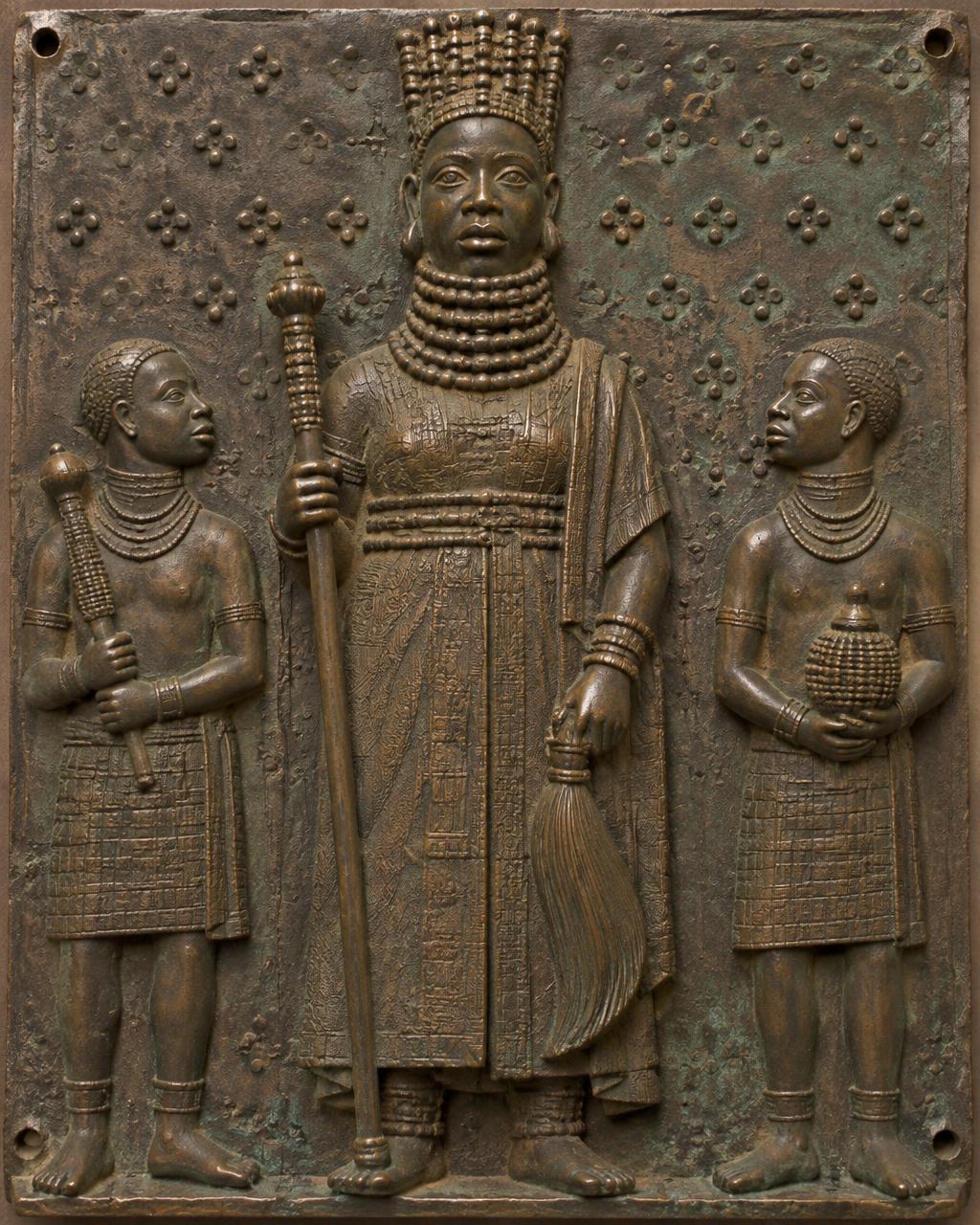 03Open now
Benin Bronze Court Reliefs
Benin City, Benin Kingdom (Nigeria) · 16th–17th century
In the palace of the Oba of Benin, hundreds of cast brass plaques once covered the wooden pillars of the courtyards — a visual archive of the court. They show the Oba, his chiefs, warriors, musicians, and attendants in high relief, wearing coral-bead collars stacked to the chin and beaded crowns. The backgrounds are filled with small punched flower patterns. Only the royal guild of casters was allowed to make them, and they remain among the finest metalwork anywhere in the world.
Study this movement →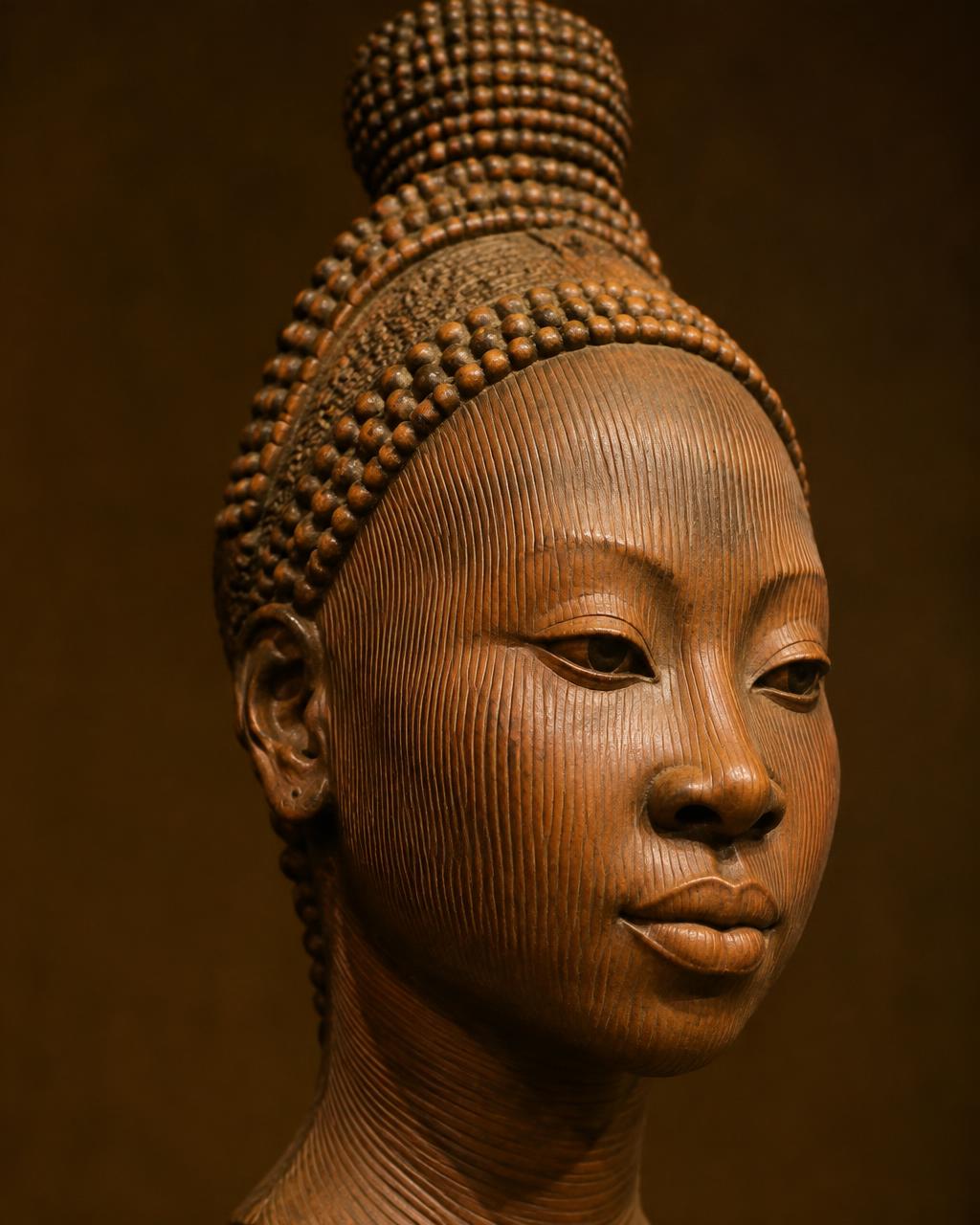 04Open now
Ife Terracotta & Bronze Naturalism
Ile-Ife, Yoruba (Nigeria) · 12th–15th century
Ile-Ife is the sacred city of the Yoruba, and its artists made some of the most serene portrait heads ever created. In terracotta and copper alloy, the faces are calm, full-lipped, and idealised — naturalistic but perfected. Many are covered with fine parallel lines running down the face, and some wear tall beaded crowns. When the first heads reached Europe in the early 1900s, some scholars refused to believe African artists had made them. They were wrong, and the heads are now recognised as masterpieces.
Study this movement →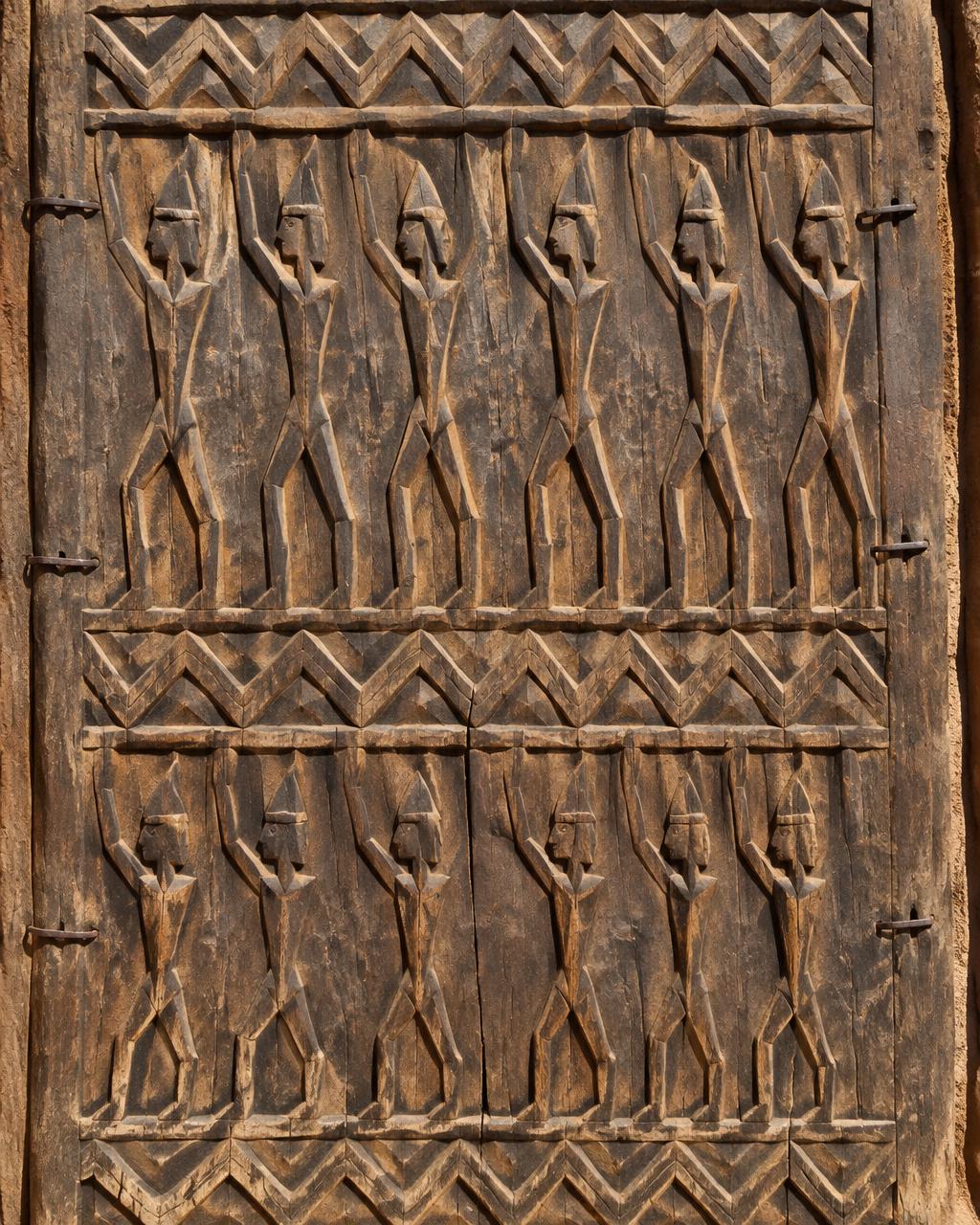 05Open now
Dogon Wood Sculpture
Bandiagara Escarpment, Mali · 15th century onward
The Dogon live along a dramatic cliff in Mali, in villages built of mud and stone. Their carvers make wooden figures, masks, and doors for granaries and shrines in a bold, angular language: long thin bodies, arms raised, shoulders squared, faces reduced to wedges. Granary doors are covered with rows of repeating ancestor figures and zigzag bands. The style strips the body down to geometry, and that simplicity is what makes it so powerful.
Study this movement →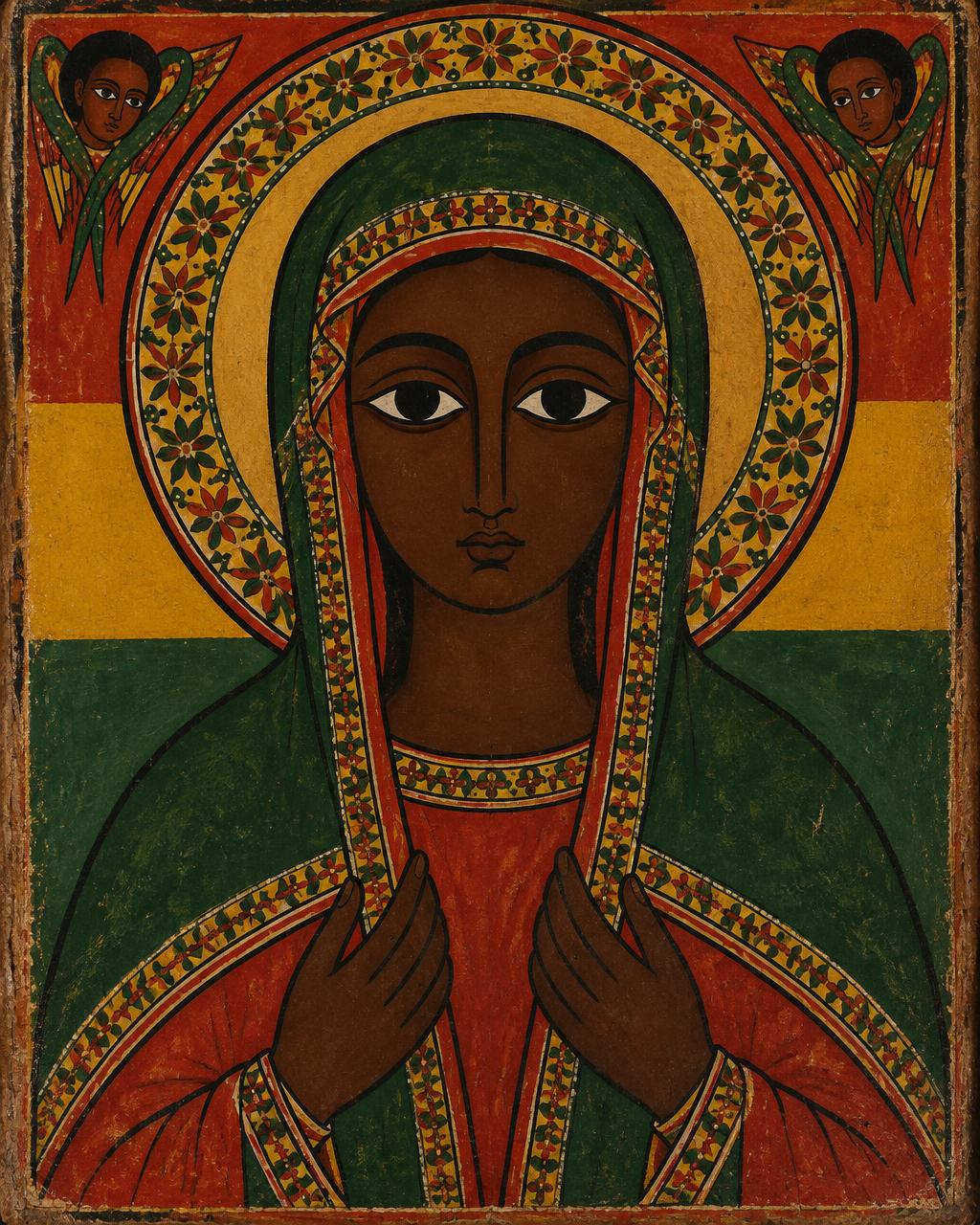 06Open now
Gondarine Ethiopian Icon Painting
Gondar, Ethiopia · 17th century
When Gondar became Ethiopia's royal capital in the 1600s, its churches filled with painted icons, manuscripts, and murals in a style that is instantly recognisable: flat blocks of bold red, yellow, and green; faces with enormous almond eyes looking straight out; halos covered in patterned ornament; everything outlined in black. It is one of the oldest continuous Christian painting traditions in the world, and it is African from end to end.
Study this movement →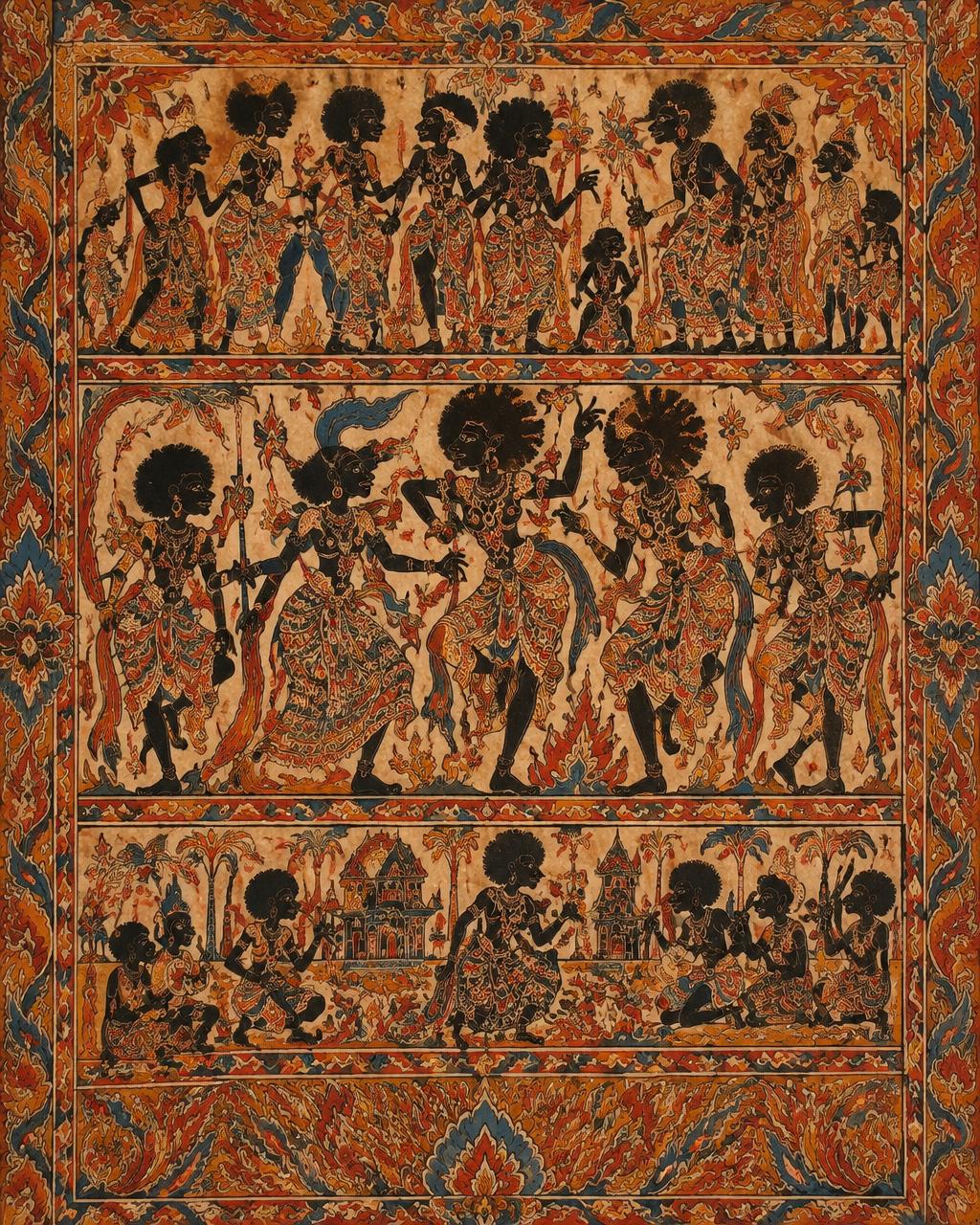 07Open now
Kamasan Balinese Painting
Kamasan village, Klungkung, Bali (Indonesia) · 15th century onward
In the Balinese village of Kamasan, painters have been telling epic stories on cloth for centuries, in a style taken from wayang kulit shadow puppets. Figures are flat, shown in profile or three-quarter, with elaborate costumes and gestures. Stories run in horizontal bands packed with foliage, flames, clouds, and architecture, and borders are thick with curling leaves. These paintings hang in temples and palaces and still get painted today by the same families.
Study this movement →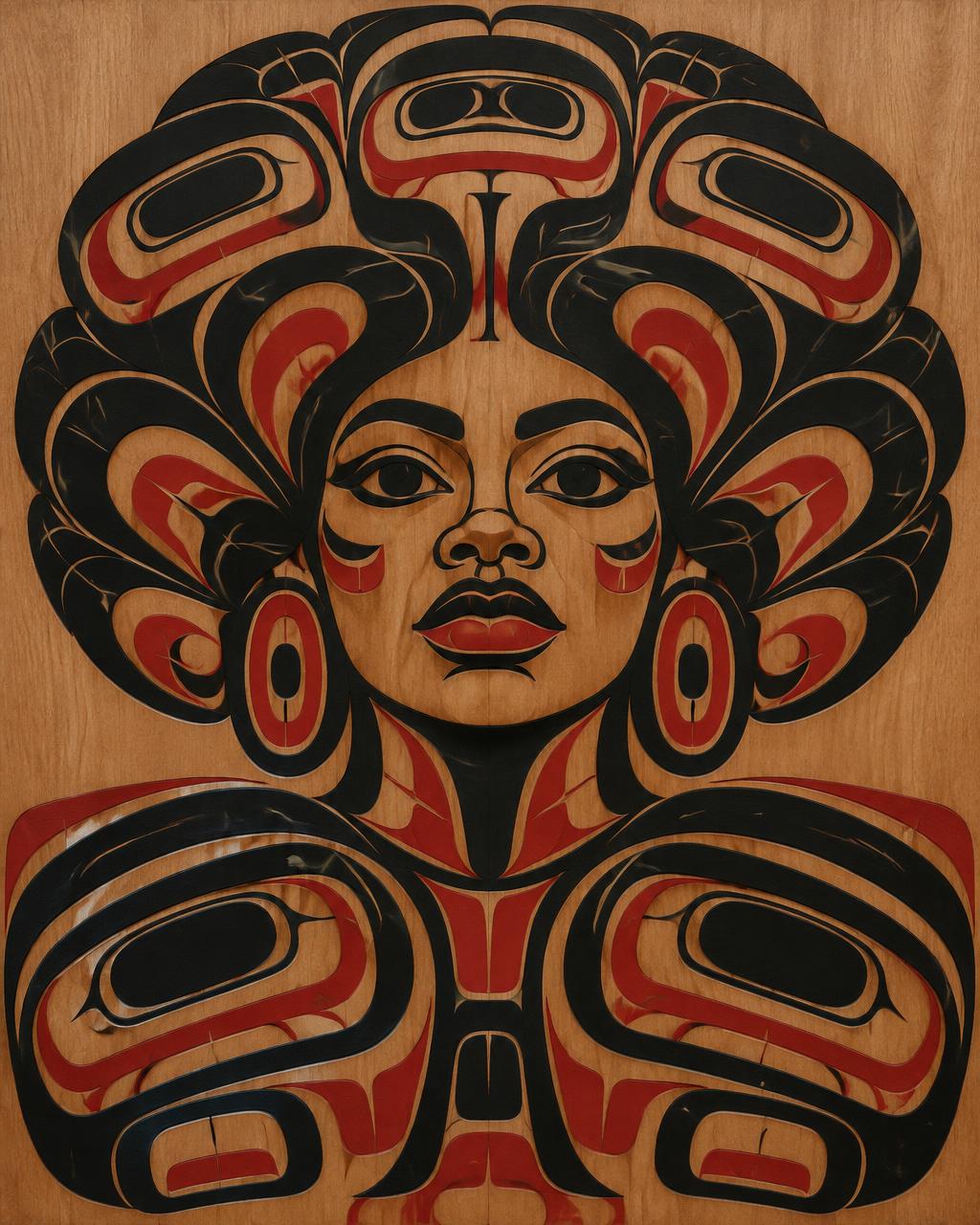 08Open now
Haida Formline Art
Haida Gwaii, Pacific Northwest Coast · 19th century onward
The Haida and their Northwest Coast neighbours developed formline: a design system built from a few shapes — ovoids, U-forms, and split-U forms — joined by continuous flowing lines that swell thick and taper thin. Crest animals like Raven, Eagle, and Bear are folded, split, and mirrored to fill a surface completely, whether a totem pole, a bentwood box, or a blanket. Primary lines are black, secondary lines red. It is a strict grammar that produces endlessly fluid images.
Study this movement →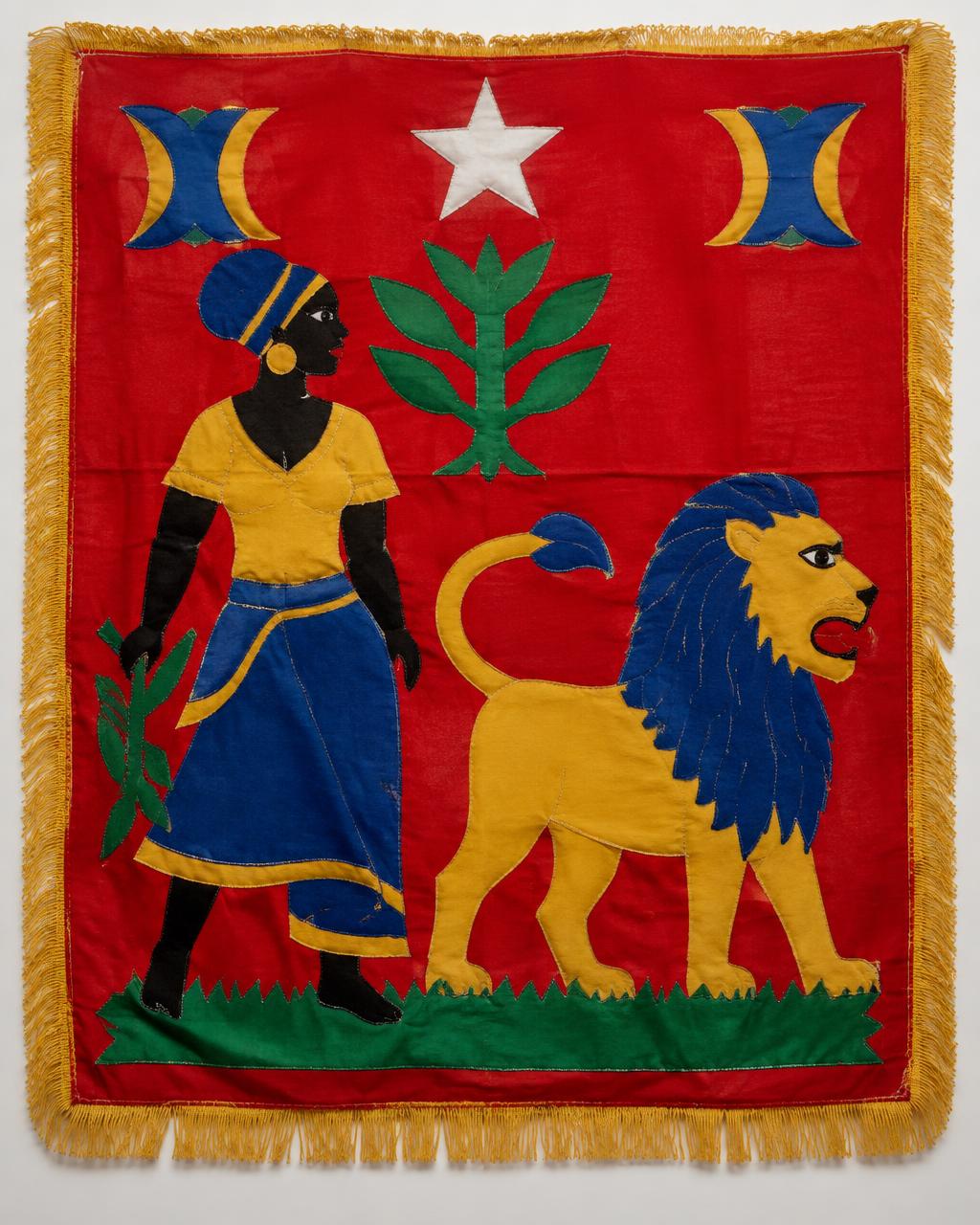 09Open now
Fante Asafo Appliqué Flags
Fante coast, Ghana · 19th century onward
Along Ghana's coast, every Fante town has Asafo companies — community groups once organised for defence, now for festivals, public works, and ceremony. Each company flies flags sewn from bold cut-out cloth shapes: lions, elephants, people, boats, trees, stars — each picture a proverb that boasts about the company. Colours are flat and saturated, figures stitched straight onto a bright ground, often with a fringe. They are witty, proud, and meant to be read from across a crowd.
Study this movement →