
06 · Gondar, Ethiopia · 17th century
Gondarine Ethiopian Icon Painting
When Gondar became Ethiopia's royal capital in the 1600s, its churches filled with painted icons, manuscripts, and murals in a style that is instantly recognisable: flat blocks of bold red, yellow, and green; faces with enormous almond eyes looking straight out; halos covered in patterned ornament; everything outlined in black. It is one of the oldest continuous Christian painting traditions in the world, and it is African from end to end.
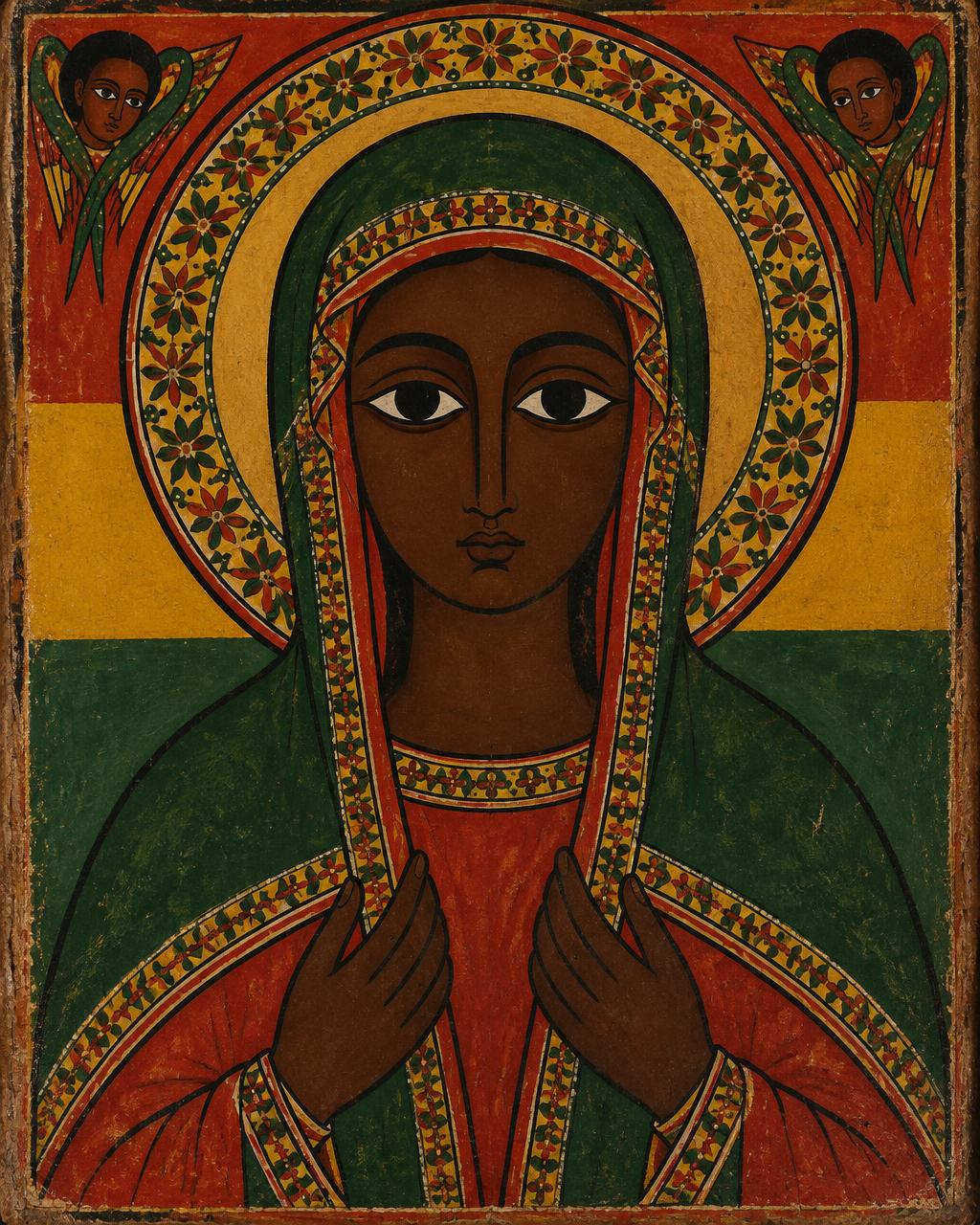
The Gondarine court painters
anonymous, 17th–18th c.
Ethiopian icon painters were usually clergy or trained church artists working on gesso-covered wooden panels and parchment. The Gondarine style developed under royal patronage and absorbed ideas from abroad while keeping its own rules: frontal faces, huge eyes to show spiritual attention, flat colour without modelling, and dense decorative borders and halos. Many works are diptychs and triptychs made to fold closed.
Look for
- large almond eyes looking outward
- flat bold red, yellow, and green blocks
- ornate patterned halos
- heavy black outlines
- gesso panel surface
You've walked the cycle for 06.
Now take that language into Studio Night. As the Style Curator in Act III, you can name this tradition and watch the whole class scene take it on.