
07 · Kamasan village, Klungkung, Bali (Indonesia) · 15th century onward
Kamasan Balinese Painting
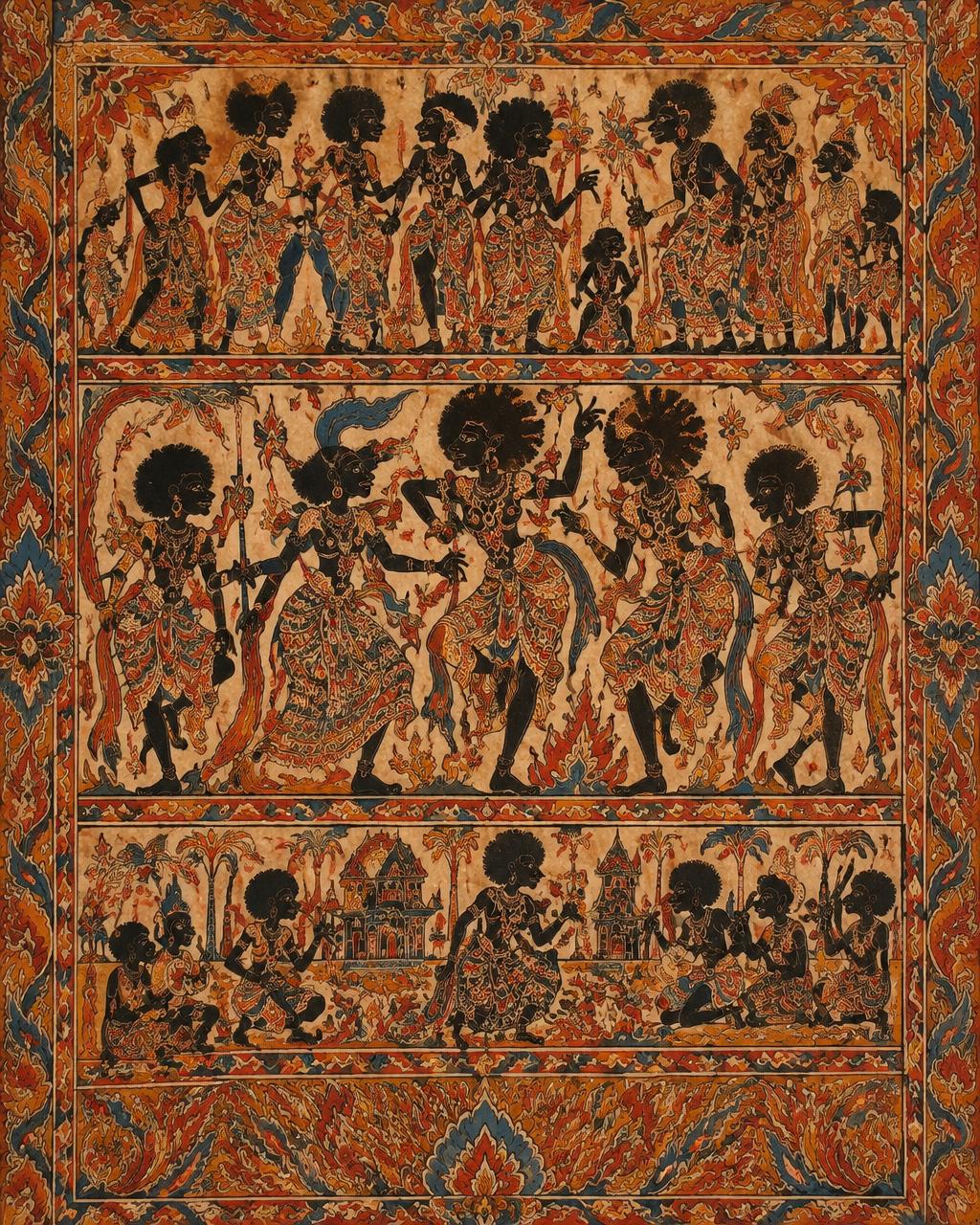
In the Balinese village of Kamasan, painters have been telling epic stories on cloth for centuries, in a style taken from wayang kulit shadow puppets. Figures are flat, shown in profile or three-quarter, with elaborate costumes and gestures. Stories run in horizontal bands packed with foliage, flames, clouds, and architecture, and borders are thick with curling leaves. These paintings hang in temples and palaces and still get painted today by the same families.
I Nyoman Mandra
1946–2018
Mandra was a master of the Kamasan tradition who founded a school in his village to teach children the style free of charge, keeping it alive when it was in danger of fading. He worked the traditional way: an outline drawn by a master, then colour filled in by assistants in natural pigments ground from stone, bone, and soot, then fine black line redrawn over the top. He insisted the stories mattered as much as the painting.
Look for
- flat wayang-puppet-style figures
- dense foliate and flame borders
- stacked narrative registers
- elaborate costume and hand gestures
- earthy natural-pigment palette on cloth
You've walked the cycle for 07.
Now take that language into Studio Night. As the Style Curator in Act III, you can name this tradition and watch the whole class scene take it on.