
05 · Bandiagara Escarpment, Mali · 15th century onward
Dogon Wood Sculpture
The Dogon live along a dramatic cliff in Mali, in villages built of mud and stone. Their carvers make wooden figures, masks, and doors for granaries and shrines in a bold, angular language: long thin bodies, arms raised, shoulders squared, faces reduced to wedges. Granary doors are covered with rows of repeating ancestor figures and zigzag bands. The style strips the body down to geometry, and that simplicity is what makes it so powerful.
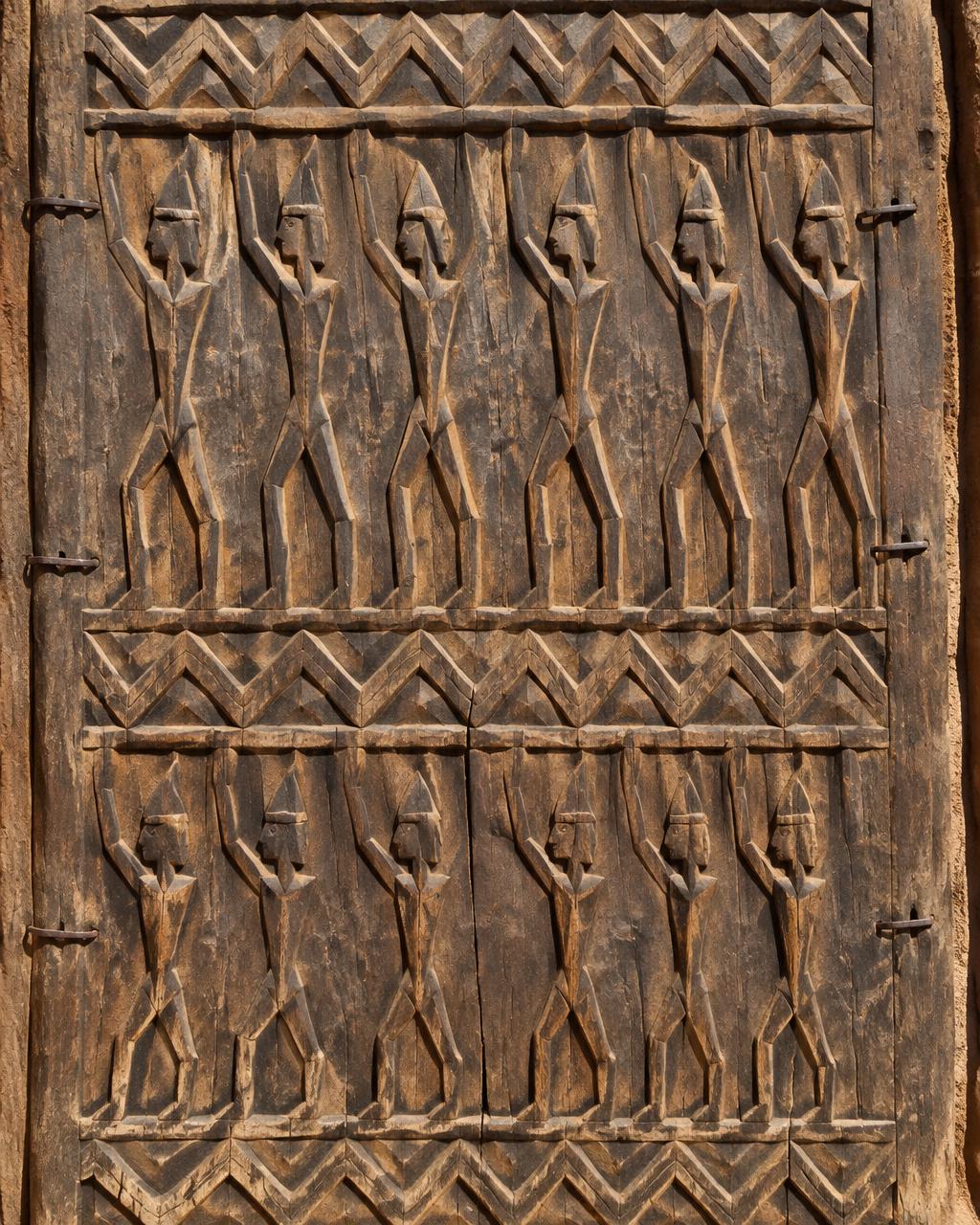
Dogon blacksmith-carvers
anonymous, many generations
Among the Dogon, carving was traditionally the work of blacksmiths, who also forged the iron tools they carved with. They worked with adzes directly into hard local wood, leaving the facets visible, and finished figures with a dark oiled or crusted surface from years of use. Figures often stand with raised arms, in pairs, or in long repeating rows across a door or lock.
Look for
- elongated, angular figures
- raised arms and squared shoulders
- repeating rows of figures on a door
- zigzag and chevron bands
- weathered, adze-cut wood
You've walked the cycle for 05.
Now take that language into Studio Night. As the Style Curator in Act III, you can name this tradition and watch the whole class scene take it on.