
08 · Haida Gwaii, Pacific Northwest Coast · 19th century onward
Haida Formline Art
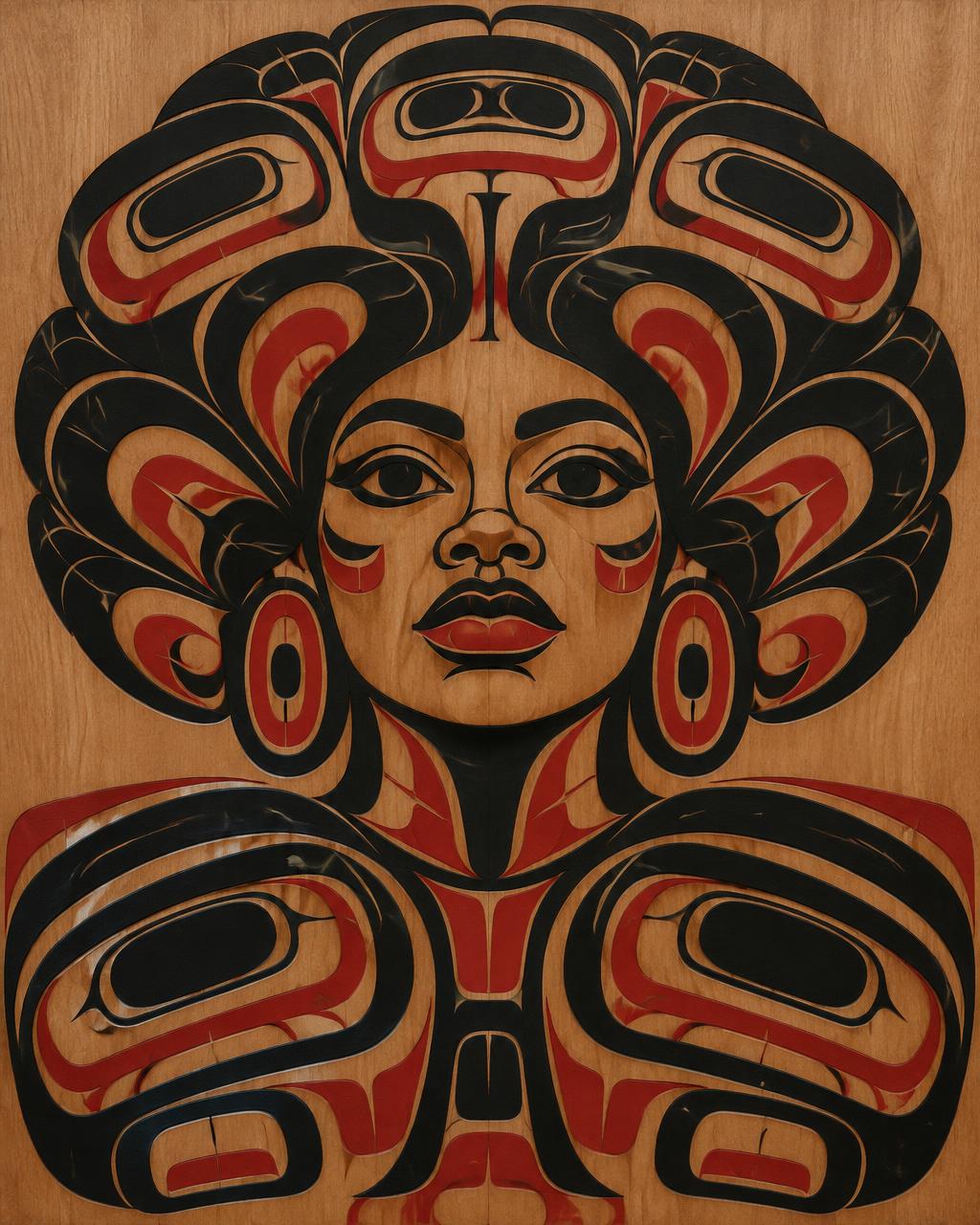
The Haida and their Northwest Coast neighbours developed formline: a design system built from a few shapes — ovoids, U-forms, and split-U forms — joined by continuous flowing lines that swell thick and taper thin. Crest animals like Raven, Eagle, and Bear are folded, split, and mirrored to fill a surface completely, whether a totem pole, a bentwood box, or a blanket. Primary lines are black, secondary lines red. It is a strict grammar that produces endlessly fluid images.
Bill Reid
1920–1998
Reid was a Haida artist who learned the formline system by studying historic works in museums and from elders, then helped spark a revival of Northwest Coast art. He worked in gold, silver, cedar, and bronze, always obeying the formline rules — continuous lines, ovoids, U-forms, symmetry — while making monumental sculptures. He argued the system was a living language, not a museum relic.
Look for
- ovoid and U-form shapes
- flowing lines that swell and taper
- strict mirror symmetry
- black primary and red secondary lines
- crest figures filling the whole surface
You've walked the cycle for 08.
Now take that language into Studio Night. As the Style Curator in Act III, you can name this tradition and watch the whole class scene take it on.